
 Facebook
 X
X
 Pinterest
 Copy Link
How to Prevent and Deal with Mold
Mold is one of those words that immediately strikes fear into the heart of any homeowner, seller, or buyer…but read this before you panic. Many issues can be treated more easily than you think, and acting quickly will save you from damage and future health problems. Mold issues can also be prevented altogether with a little awareness and diligence. Here is the scoop on the m-word and how to deal with it.
What is Mold?
Molds are microscopic organisms that are found virtually everywhere indoors and outdoors. There are thousands of different kinds of mold. Their natural function is to help break down dead materials such as stumps and leaves so the nutrients can be used by the environment. For molds to grow, they need two things: an organic food source—such as leaves, wood, paper, or dirt—and moisture. Mold is prolific here in the Pacific Northwest but, contrary to what some people think, it’s not a geographic problem—mold can occur anywhere, no matter where you live.
Mold Causes Damage
Mother Nature uses mold to decompose plant material. Unfortunately, when present indoors, it can be equally destructive. Mold growth can damage furnishings, such as carpets, couches, and cabinets. If it goes undetected or neglected, it can also cause serious damage to walls and structural elements in your home.
Mold is present everywhere in very small amounts, and most people tolerate exposure with no adverse effects. If allowed to spread, however, it may cause problems. As molds grow, they release thousands of tiny spores that travel through the air. When inhaled in large enough amounts, these spores may increase the risk of adverse health effects in some people, particularly respiratory problems. A less-common strain of mold called “black mold” can be particularly troublesome to those who are especially sensitive. Here is a good resource for further reading on mold in homes.
Common Causes of Mold Growth in Homes
No matter your local climate, your home is vulnerable to mold. There are many sources of mold problems, from faulty air conditioners to poorly positioned sprinkler systems. Here are the most common sources of mold inside the home:
- Flooding
- Leaky roofs or damaged gutters
- Heating or cooling system problems
- Poor drainage next to foundation
- Plumbing leaks from toilets, refrigerators, and dishwashers
- Damp basement or crawl space
- Leaking windows or doors
- Steam from shower or cooking
- Indoor exhaust from dryer
- Inadequate home ventilation
Detecting Mold in Your Home
If you can see or smell mold inside your home, it’s time to act. Any area that has sustained past or ongoing water damage should be thoroughly inspected—you may find hidden mold growth in water-damaged walls, floors, or ceilings. Walls and floors that are warping or discolored can also indicate moisture problems, as can condensation on windows or walls.
Your first step will be to determine whether the mold is due to an actual water leak or high humidity in the air. If the mold is appearing behind furniture, in wall corners, or on furnishings, it’s likely due to humidity. Condensation appearing on modern double-pane vinyl windows is another sign that your home’s humidity might be too high. Here are some tips on how to control moisture in your home.
How to Prevent Mold in Your Home
Since mold is always present, there’s no way to eliminate it completely. You can control indoor mold growth, however, by controlling moisture.
- Remove the source of moisture by fixing any leaks or other water problems.
- Make sure your bathroom fans and dryers are properly vented to the outside. Always use the exhaust fan when cooking or showering. You can also replace the bathroom fan with a constant flow unit for additional ventilation; Environix, the company we use for mold remediation, recommends these models that run quietly.
- Use a dehumidifier to reduce moisture levels in the air (your goal is below 60% relative humidity).
- Make sure your AC system is well maintained and is the correct size for your home. A faulty AC system can cool the air without removing the water vapor, creating high humidity.
- Insulate your home well to prevent indoor condensation.
- Have your heating, ventilation, and cooling systems professionally cleaned annually. Air-duct systems can easily become contaminated with mold.
- Regularly clean moist areas such as the bathroom with products that treat mildew.
- Dry clean your carpets (as opposed to wet cleaning them).
- Avoid carpeting bathrooms and basements.
- Clean any moldy surfaces as soon as you notice them.
How to Deal with Mold in Your Home
Mold can be a manageable problem. If you have a mold problem that is isolated to a small area—less than a square yard or so—you can try to resolve it yourself. However, if your mold problem is severe or if you have extensive water damage, it’s best to call a professional contractor who specializes in mold removal (Environix is the local Puget Sound area company that we use and prefer).
Porous items that are hard to clean, such as carpet and drapes, should be discarded. Moldy drywall and ceiling tiles can be removed and replaced. Hard, nonabsorbent surfaces such as glass, plastic and metal should be thoroughly cleaned with soap and water and allowed to dry completely. For solid items that are semi-porous, such as floors, cabinets, and wood furniture, scrub with an ammonia-free cleaner and hot water to remove the mold. Rinse with water and dry thoroughly. After cleaning, apply a mildewcide to kill mold and spores.
When cleaning mold, remember to wear gloves, a mask, and eye protection, and work in a well-ventilated area. Never mix cleaner containing bleach and ammonia; this can result in the release of a toxic gas. And be sure to throw away any sponges or rags that you use for cleaning.
Adapted from an article that originally appeared on the Windermere Blog

We earn the trust and loyalty of our brokers and clients by doing real estate exceptionally well. The leader in our market, we deliver client-focused service in an authentic, collaborative, and transparent manner and with the unmatched knowledge and expertise that comes from decades of experience.
© Copyright 2026, Windermere Real Estate/Mercer Island.
What is a Buyer Agency Agreement and Why Does it Matter?

In today’s evolving real estate landscape, one of the biggest changes buyers will encounter is the relatively new requirement to sign a Buyer Agency Agreement. While this added step may sound formal, it’s actually designed to make the home-buying process more transparent, secure, and ultimately more beneficial for everyone involved.
What is a Buyer Agency Agreement?
At its core, a Buyer Agency Agreement is a written contract between you and your real estate agent. It outlines your working relationship, defining the agent’s responsibilities, the services they’ll provide, the duration of your partnership, and how their compensation will be handled. Think of it as the roadmap for your home-buying journey, ensuring everyone starts on the same page, with mutual understanding and trust.
Starting in mid-2024, the National Association of REALTORS® (NAR) began requiring agents to have a signed buyer agency agreement before showing homes to clients. This change stems from a nationwide settlement designed to bring greater transparency and accountability to real estate transactions by ensuring all agent-buyer relationships are clearly defined in writing. In some markets, this requirement isn’t new; states like Washington, Idaho, and Utah have long recognized the importance of formalizing this relationship. But for many buyers, this will be their first time signing such an agreement, and understanding its purpose can make all the difference.
So, why does it matter?
Transparency and Trust
This agreement ensures clarity around both compensation and representation. It spells out how your agent is paid—whether by the seller, by the buyer, or by both—so there are no surprises later. With these details defined upfront, you can move forward with confidence, knowing your agent’s focus is squarely on your best interests.
Defined Roles and Responsibilities
A Buyer Agency Agreement clearly outlines what your agent will do for you: from helping you navigate listings and compare neighborhoods to guiding you through offers, inspections, and closing. It also defines your responsibilities as a buyer, such as communicating openly and working exclusively with your chosen agent throughout the duration of the agreement. Together, these expectations create a smoother, more collaborative experience.
Protection and Professionalism
Buying a home is one of life’s biggest investments, and having a written agreement in place protects both you and your agent by setting clear parameters for your working relationship. It ensures your agent is committed to advocating for your needs, maintaining confidentiality, and acting in your best interest throughout the process.
While some may see the Buyer Agency Agreement as an extra step, it’s really a safeguard, one that reinforces the professionalism and dedication that define Windermere Real Estate agents. It turns a handshake of trust into a documented commitment, empowering buyers to make confident, informed decisions at every stage of the journey.
Connect with me today to learn more about how I can help you navigate your home search with confidence.

This article originally appeared on the Windermere Blog
We earn the trust and loyalty of our brokers and clients by doing real estate exceptionally well. The leader in our market, we deliver client-focused service in an authentic, collaborative, and transparent manner and with the unmatched knowledge and expertise that comes from decades of experience.
© Copyright 2026, Windermere Real Estate/Mercer Island.
Planning Ahead: A 12-Month Guide to Buying Your First Home

Thinking about buying a home can be daunting, especially if it’s your first time. What should be an exciting milestone can feel overwhelming without a clearly defined roadmap, and diving in headfirst without a solid plan can lead to unnecessary stress, financial surprises, and missed opportunities. However, by establishing a timeline and breaking the process down into manageable steps, you can move forward with confidence and clarity.
Here is your month-by-month guide to preparing for a successful home purchase in the following year.
12 – 10 MONTHS OUT
Know Your “Why”
Understand your motivation for buying. Are you relocating, growing your household, or ready to invest in your future? Clearly defining your “why” will help shape your search criteria and influence your budget, location, and timeline.
Set Clear Goals
Start to think about what you want in your new home. Create a list of your wants versus must-haves, including location, budget, size, and style of home. These goals will act as a compass throughout your search. Be sure to include your ideal timeline and what you hope to get out of the overall experience.
Find an Agent Who Prioritizes Your Goals and Timeline
A trusted real estate agent is more than just a facilitator; they’re a guide, negotiator, and advocate. Look for someone who understands your timeline and long-term vision and is familiar with the local market. Ask them to provide a first-time buyer’s guide or checklist to help you get started. Building this relationship early allows your agent to understand your needs and preferences in advance, setting the stage for a smoother process when you’re ready to make your move.
9 – 7 MONTHS OUT
Assess Your Finances
Take a close look at your income, debt, and spending habits. Use this time to create a monthly budget that includes future mortgage payments, utilities, insurance, taxes, and home maintenance. Many experts recommend spending no more than 28% of your gross monthly income on housing costs.
Boost Your Credit
Your credit score has a significant impact on your buying power, including your mortgage rate and loan approval. Take the next few months to pay down high-interest debt, stay current on all payments, and avoid opening new credit accounts. Check your credit report for errors and work on improving your score if needed.
Start Saving
You’ll want to have enough set aside not only for a down payment, which is typically 3% to 20% of the purchase price, but also for closing costs, moving expenses, and initial home repairs or furnishings. During this time, try to avoid nonessential major purchases and think about setting up a dedicated home savings account to stay consistent.
6 – 4 MONTHS OUT
Talk to a Financial Advisor
A financial advisor can help you align your financial goals with your homebuying plans. They can offer advice on what you can realistically afford and help identify areas to strengthen your financial readiness. You can also use tools like an online mortgage calculator to get a clearer idea of what your future monthly payments might look like.
Research Homebuyer’s Courses & Guides
Take advantage of first-time homebuyer resources, guides, and online courses. The more you know earlier on, the more confident you’ll feel.
3 – 2 MONTHS OUT
Familiarize Yourself with the Market
Start browsing homes and monitoring prices in the neighborhoods you’re interested in. Learn whether your local market is currently favoring buyers or sellers and what that could mean for your strategy.
Meet with a Lender and Get Pre-Approved
Meeting with a lender and getting pre-approved can help give you a clear picture of how much you can borrow and what price range to shop within. It also shows sellers that you’re a serious buyer when the time comes to make an offer. Your realtor can recommend trusted lenders to work with and assist you through this process.
Start Your Home Search
Now that you have your list of wants and needs and know your price range, you’re ready to start searching for your dream home. Use online property research tools to filter by location, features, and price to see what’s available in the locations you like. Narrow down your top homes and start scheduling showings and comparing listings.
1 MONTH OUT
Make an Offer
Once you find “the one,” your agent will help you craft a competitive offer, negotiate terms, and guide you through contingencies.
Get a Home Inspection
If your offer is accepted, a licensed inspector will identify any issues with the property before you finalize your purchase. Depending on what comes up, this can give you leverage to negotiate repairs or price adjustments.
THE TIME HAS COME
Closing On Your New Home
You’ve made it! During closing, you’ll sign paperwork, pay final costs, and receive the keys to your new home. Your agent and lender will walk you through the final steps to ensure everything goes smoothly.
Buying a home may seem like a big leap, but with a solid 12-month plan and the right support, it can be an extremely rewarding experience. Take it one step at a time and know that I’m here to help whenever you’re ready.

This article originally appeared on the Windermere Blog
We earn the trust and loyalty of our brokers and clients by doing real estate exceptionally well. The leader in our market, we deliver client-focused service in an authentic, collaborative, and transparent manner and with the unmatched knowledge and expertise that comes from decades of experience.
© Copyright 2026, Windermere Real Estate/Mercer Island.
The Pitfalls of Overpricing Your Home

When a homeowner prepares to put their house up for sale, two things are usually top of mind: how long will it take to sell and how much can we get for it. During a seller’s market, when stories of bidding wars and cash offers abound, it can be tempting to put as high a price tag on your home as possible. But even when the market favors sellers, overpricing your home can jeopardize your efforts to sell quickly and get top dollar.
Missing Your Market
The vast majority of homebuyers start their search online, and the first criteria they often enter is the price range. If your home is above the high point of their range, buyers in your target market will never even see your listing—it simply won’t show up in their searches. In addition, it’s human nature to go after the top item in a collection. Buyers want the most house they can get within their budget. This means you want to be the best house compared to those in your price range, rather than among the bottom compared to those in a more expensive bracket.
Key takeaway: You want to shine against your competition, not pale by comparison
Playing the Numbers
Selling a home is a numbers game: the more potential buyers, the greater chance of an offer. Overpriced homes get fewer showings, both in person and online. Your agent will tell you that showings are critical to capturing the interest of buyers, but if the home is overpriced, they will have difficulty attracting attention to your home. This can slow the entire home selling process, leaving both you and your agent feeling frustrated.
Key takeaway: More showings = more offers.
Going Stale
It’s also human nature to be drawn to what’s new, the bright, shiny object, as the saying goes. New listings attract the most attention—that’s when buyer interest is highest. The longer your home is on the market, the less appealing it becomes. And at a certain point, you may be forced to lower the price. Many buyers and their agents will assume the reason the house has been on the market so long, and why you had to lower the price, is because there is something wrong with it. Once the price drops begin, they can continue, which creates the risk of selling your home for less than what it is worth.
In addition, the longer your home is on the market, the more expenses you incur. Mortgage payments, utilities costs, and seller’s fees will continue to pile up, making it harder to recover from these costs when your home does eventually sell.
Key takeaway: Be the bright, shiny object.
Losing at the Last Minute
Let’s say you do find a buyer at the overpriced cost. During closing, the lender will order an appraisal of your home. If the appraiser finds that the market value of the home is less than the selling price, they could deny financing. If that happens and you are forced to put the house back on the market, buyers’ agents will be able to see that it’s a relisting, could assume something is wrong with the house and share those concerns with their client.
Key takeaway: Be realistic about value.
Want an accurate idea of your home’s value in the current market? I can provide you with a Competitive Market Analysis (CMA). Unlike automated home value calculators, I take into account recent market trends, unique home features, competing properties, and your home’s overall marketability.

Adapted from an article that originally appeared on the Windermere blog August 5th, 2024.
We earn the trust and loyalty of our brokers and clients by doing real estate exceptionally well. The leader in our market, we deliver client-focused service in an authentic, collaborative, and transparent manner and with the unmatched knowledge and expertise that comes from decades of experience.
© Copyright 2026, Windermere Real Estate/Mercer Island.
5 Home Design Trends for 2026

In looking ahead at interior trends for this year, it’s clear that 2026 is all about the vibes. Creating warm, genuine spaces that reflect your individual lifestyle and create a mood is much more “in” than passing fads that rely on strict aesthetic rules. Rich colors, handmade textures, and grandma-inspired patterns are infusing into rooms once prized for their understated minimalism. Here are five trends to try incorporating into your home…
Rich, Moody Colors
Warmer, nature-inspired colors continue to dominate the palette but are moving deeper and more saturated. In looking at the top colors of the year chosen by leading paint brands, earthy and nostalgic tones such as chocolate brown, burgundy, and khaki all make a prominent appearance. Moss and blue-greens also continue their popularity. On the lighter end of the spectrum, the neon pinks, blues, and greens that peaked in 2024 have now all softened into powdery pastels. Mauve is also making a comeback.
The monochromatic tonal trend is also shifting toward “atmospheric color,” where varying but closely related hues are carried across walls, furniture, and textiles to set a certain mood. It could be energetic reds and oranges for a fitness room; soothing pastels for a bedroom; or rich browns and plums for a comforting study. “Color drenching” takes it one step further by carrying a single bold shade or pattern across walls, ceilings, draperies, and trim. For inspiration, draw from the color families in Sherwin-Williams’ Colormix 2026 forecast.

“Grandmillennial” Style
Continuing on the trajectory of comforting, nostalgic interiors, this movement revives the old-school design fads that millennials fondly remember from grandma’s house. Rather than stiff, polished traditionalism, however, this new take is quirky and deeply personal. Vintage floral patterns are mixed together and layered throughout upholstery, rugs, draperies, and, pillows…perhaps with some skirted chairs, shapely wooden arms/legs, ruffles, buttons, cording, or tassels thrown in. Personal mementos and thrift store finds like mismatched antique furniture, classic art, and stained glass lighting further the lived-in feel (and are a sustainable source of style). Modern touches mixed in keep the room feeling coordinated rather than chaotic…you can also try sticking to a color family repeated throughout the room, and having a base of neutral solids.

Small Moment Spaces
While the closed room layouts of the 90s have remained solidly out of style, designers are finding ways to reclaim dedicated spaces within the open layout. This can be done through niches, soft partitions like curtains, or pocket doors. Think cozy reading nooks; highly decorated “jewel box” seating niches layered with sumptuous colors and textiles; built-in desks or bookshelves at the end of the hallways; and semi-separated bedroom sitting areas reminiscent of a boutique hotel room.

The Fifth (and Sixth) Walls
Where accent walls were once all the rage, we’re now seeing accent ceilings take their place. Bold colors, hand-painted frescoes, and even wallpaper overhead add immediate interest to a room. Floors are following in their wake with bold patterned tiles or rugs adding yet another dimension of variety. Try this in a small space like a hallway, bathroom, or bedroom. Box ceilings can also make a fun canvas for accent colors. Not quite ready to take the plunge? “Color capping” is a more subtle version of this trend with colors gradually deepening toward the ceiling, which is painted a slightly darker shade of the same wall hue.

Personal Retreats
Wellness and relaxation have remained priorities for homeowners in the years following the pandemic, and now we’re seeing a rise in private sanctuaries that go beyond (or complement) the basic home gym. These can be anything from pocket size meditation rooms to spa-like recovery rooms complete with saunas and cold plunge pools. Clean, warm wood finishes and natural light are often utilized to create a biophilic sense of calm.

Curious about how to incorporate the latest home trends before you sell? Our agents see the latest home styles every day. Reach out for advice!
We earn the trust and loyalty of our brokers and clients by doing real estate exceptionally well. The leader in our market, we deliver client-focused service in an authentic, collaborative, and transparent manner and with the unmatched knowledge and expertise that comes from decades of experience.
© Copyright 2026, Windermere Real Estate/Mercer Island.
Strategic Investments to Boost Value & Curb Appeal

When it’s time to sell your home, one of the biggest questions is how to make it as appealing as possible to today’s buyers. While market conditions, location, and timing all play a role, the updates you choose before listing can make a meaningful difference in both your selling price and how quickly your home goes under contract. The key is knowing where to invest your time and money. Not every project pays off, but some smart upgrades can give your home a competitive edge, help it stand out in online listings, and create the kind of first impression that gets buyers excited.
Here are some of the most impactful ways to invest in your home before putting it on the market.
Fresh Paint and a Neutral Palette
Few improvements have a more substantial return on investment than paint. A fresh coat instantly refreshes a space, making it feel clean, updated, and well-maintained. In fact, a recent report1 by the National Association of REALTORS® found that painting is the #1 project agents recommend sellers do before selling.
Neutral tones for interiors, such as light beige, soft grays, and crisp whites, appeal to the broadest audience and allow buyers to envision their own style in the home. Check out the Sherwin-Williams Colormix Forecast 2026 for some up and coming hues (and opt for the lightest shades). It’s crucial not to overlook trim, doors, and even ceilings, as these small details help create a polished, move-in-ready feel. And if your front door could use a pop of personality, consider a bold, welcoming color that complements the rest of the exterior.
Curb Appeal That Counts
Buyers often form an impression before they even step inside. Landscaping, exterior lighting, and simple maintenance go a long way toward making your home inviting. Think trimmed hedges, fresh mulch, pressure-washed walkways, and a tidy lawn. It’s also smart to ensure outdoor areas are safe, from repairing uneven paths to addressing any obvious hazards. Here is a printable checklist so you don’t miss anything.
Adding planters with seasonal flowers, updating house numbers, or swapping out an old mailbox can elevate your home’s appearance without requiring a significant investment. For buyers scrolling through listings, that curbside charm can be a deciding factor that gets them to schedule a showing.
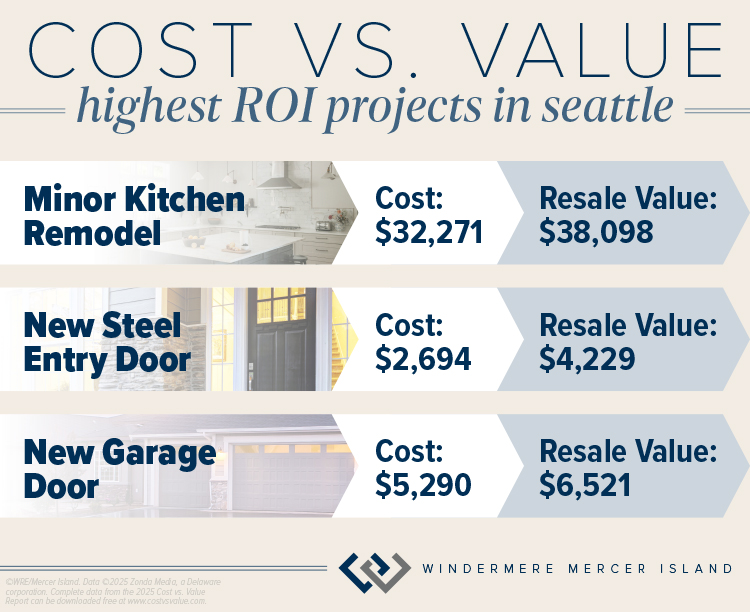
According to the latest Cost vs. Value report for Seattle2, exterior curb appeal investments such as a basic new front door or garage doors can net you a profit when it’s time to sell:
Kitchen and Bathroom Touch-Ups
Kitchens and bathrooms continue to be high priorities for buyers, but you don’t need to take on a full remodel to make an impact. Small upgrades like replacing outdated cabinet hardware, installing new light fixtures, or swapping in modern faucets can transform the look of these spaces.
In the kitchen, consider updating your backsplash with a clean, timeless tile or refreshing worn countertops with a durable surface. In bathrooms, re-grouting tile, caulking any cracks, replacing mirrors, or updating vanities are simple ways to modernize without overspending.
The Cost vs. Value report2 also found that the kitchen can be a smart place to invest in a minor remodel of surfaces and newer mid-priced appliances and fixtures. In the Seattle area, a minor remodel is estimated to recoup 118% of its cost when you sell.
Flooring Matters
Floors are often one of the first things buyers notice when touring a home. If your carpets are worn or stained, professional cleaning or even replacement can make a big difference. Hardwood floors are especially appealing and refinishing them is often more cost-effective than replacing them.
For areas where replacement makes the most sense, consider durable and stylish options like engineered wood or luxury vinyl plank. Consistent flooring throughout the main living areas can also help a home feel more spacious and cohesive.
Energy-Efficient Features
Today’s buyers are increasingly focused on efficiency and sustainability. Investments like LED lighting, programmable thermostats, and updated appliances not only lower utility bills but also signal to buyers that the home is modern and thoughtfully maintained.
If your budget allows, new windows or improved insulation can add value while appealing to environmentally conscious buyers. Highlighting these upgrades in your listing helps showcase both comfort and cost savings.
Decluttering and Staging
Sometimes the most impactful upgrade isn’t about new finishes, it’s about presentation. Decluttering each room, minimizing personal items, and rearranging furniture to optimize space can dramatically change how buyers perceive your home. Here’s a printable checklist to help. And the best part? It’s completely free.
Professional staging takes this one step further, creating a warm and welcoming atmosphere that helps buyers envision living in the space—it can also help your home sell faster and for more money according to a 2025 report3. Even small touches, like fresh flowers, cozy throws, and well-placed artwork, can make your home feel more stylish, comfortable, and truly move-in ready.
Making Smart Choices
The goal of any pre-sale investment is to spend strategically, choosing projects that increase appeal without overextending your budget. You can also refer to this article on what NOT to do.
As a Windermere agent, I’m an expert at helping sellers decide which upgrades matter most. From recommending paint colors to connecting you with trusted contractors, I’m here to make sure you get the best return on your investment. Through our Windermere Ready program, we can even front the cost of improvements like painting, landscaping, cleaning, and staging so your home shines its brightest when it hits the market. With concierge-level service and no payments due until closing, it’s a simple way to maximize your home’s value and sell faster.
Connect with me today to learn more about how I can help you prepare your home for the market with confidence:

Adapted from an article that originally appeared on the Windermere blog October 1, 2025.
1Copyright ©2025 “2025 Remodeling Impact Report.” NATIONAL ASSOCIATION OF REALTORS®. All rights reserved. April 9, 2025, https://www.nar.realtor/sites/default/files/2025-04/2025-remodeling-impact-report_04-09-2025.pdf.
2©2025 Zonda Media, a Delaware corporation. Complete data from the 2025 Cost vs. Value Report can be downloaded free at www.costvsvalue.com.
We earn the trust and loyalty of our brokers and clients by doing real estate exceptionally well. The leader in our market, we deliver client-focused service in an authentic, collaborative, and transparent manner and with the unmatched knowledge and expertise that comes from decades of experience.
© Copyright 2026, Windermere Real Estate/Mercer Island.
Renting vs Buying: Which is Better for You?

Knowing whether it’s the right time to rent or buy depends on your buying power, what you’re looking for in a home, your local market conditions, your plans for you and your household, and the responsibilities you’re prepared to take on at your residence.
Renting gives you greater flexibility to relocate, fewer home maintenance responsibilities, and can often be more the more affordable option, depending on where you live. The extra costs associated with owning a home—interest payments, taxes, repairs—may be too much for some renters to handle.
Becoming a homeowner also has its advantages. From a financial standpoint, owning is usually better than renting in the long term—it allows you to build wealth as your property gains equity; your monthly payments are stable and actually become more affordable over time relative to your income; and some of the costs may be deductible at tax time. From a lifestyle standpoint, owning also affords you greater freedom to customize your living space.
Ultimately, the right decision depends on your situation. If you don’t plan to be living in the same place for at least five years, renting might be more logical, as it allows you more flexibility when it comes time to move again. If you’re looking to settle down for the better part of a decade or longer and can afford to buy a home, becoming a homeowner may be the better option. Here are a few additional considerations to guide your renting-versus-buying decision making process.
What are the local real estate market conditions?
Investigate the local sales and rental markets to get an idea of both typical home prices and the average monthly payment for a rental. When comparing housing costs, be sure to base your evaluation on what’s happening in your city and neighborhood, not the nationwide averages. I track these stats regularly, so feel free to contact me for an accurate update on prices in your neighborhood.
For a quarterly breakdown of local market conditions in the Seattle area, explore my Market Review page. Each report breaks down the latest figures in home sales, home prices, and days on market for regions throughout Seattle and the Eastside. They also include helpful insights and data analysis.
What can you afford?
Making the jump from renter to homeowner is often a question of affordability. Your mortgage rate will depend on your financial strength, your credit score, and other factors, so make sure to talk to a loan officer before you start looking for a home. Getting pre-approved for a mortgage will identify what you’re able to afford and helps strengthen your offer when the time comes.
To get an idea of what you can afford, try these Financial Calculators. You can estimate your monthly payment for any listing price/mortgage terms to get a well-informed picture of whether it’s the right time to buy.

Will you need to make repairs to your new home?
Buying a fixer-upper may seem like a great way to get a deal on a house, but if the money you spend on the repairs is too great, your profit could be diminished when it comes time to sell. The same is true for remodeling and improvement projects. There are various renovation financing loans available to you that can help with the costs of home repairs, though extra consultations, inspections, and appraisals are often required in the process of securing these loans. Ultimately, if you can only afford a home that demands major improvements, and you don’t have the skills to do much of the work yourself, you may be better off renting.
Can you rent part of the house you’re buying?
If you buy a house with rental-capable space (extra bedroom, mother-in-law unit, etc.), you could use the rental income to pay off your mortgage faster and contribute more to your savings. But, of course, you need to be willing to share your home with a tenant and take on the responsibilities of being a landlord or working with a professional property manager to help you with those duties. Renting out a space in your home will also require you to purchase landlord insurance on top of your existing homeowners insurance policy.
Making Your Decision to Rent or Buy
At the end of the day, the decision is up to you. Based on the conditions laid out above, it simply may not be the right time for you to buy. Fortunately, when it comes to being a homeowner, it’s not now or never. I’m happy to be your resource in gauging whether it’s the right time to buy and guiding you through the process toward homeownership. To get started, connect with me today.
We earn the trust and loyalty of our brokers and clients by doing real estate exceptionally well. The leader in our market, we deliver client-focused service in an authentic, collaborative, and transparent manner and with the unmatched knowledge and expertise that comes from decades of experience.
© Copyright 2025, Windermere Real Estate/Mercer Island.
Adapted from an article that originally appeared on the Windermere blog April 11, 2022.
Remodeling Impact Report: Projects That Bring Joy & ROI

Is your home ready for a refresh? Whether it’s for their own enjoyment or to prep their houses for sale, Americans are investing more and more money into remodeling each year. According to a recent report by the National Association of REALTORS® (NAR), the demand for top-condition homes is going up among buyers as well. So which projects will get you the most bang for your buck? Or, perhaps more importantly, which projects will bring you the most joy? Here’s what the Remodeling Impact Report revealed…
Projects That Boost Your Happiness
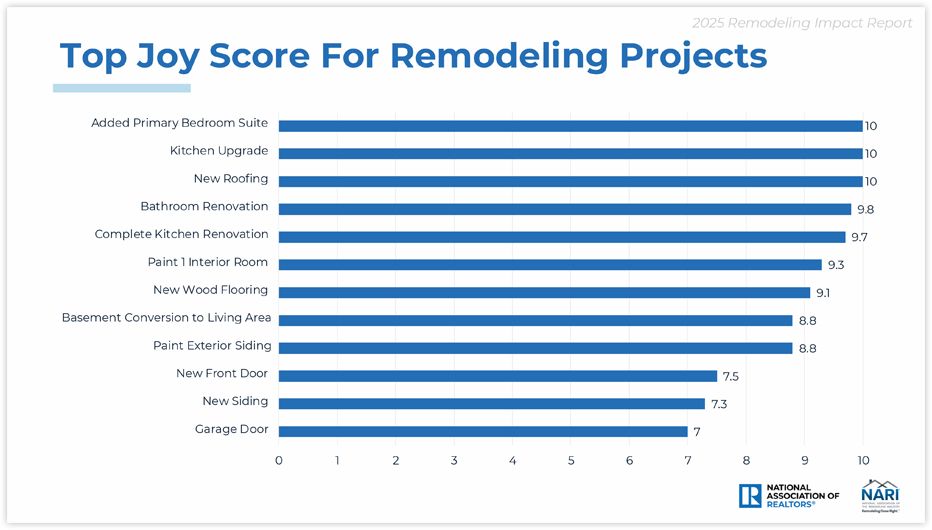
It’s easy to think about improvements in terms of monetary value…but what about the value of enjoyment and enhanced livability? As part of their report, NAR calculated a “Joy Score” for common remodeling projects based on the happiness homeowners reported with their renovations. Three projects stood out with perfect joy scores: adding a primary bedroom suite, upgrading the kitchen, and replacing roofing. Here are the projects with the highest joy scores:
Projects That Help Pay for Themselves
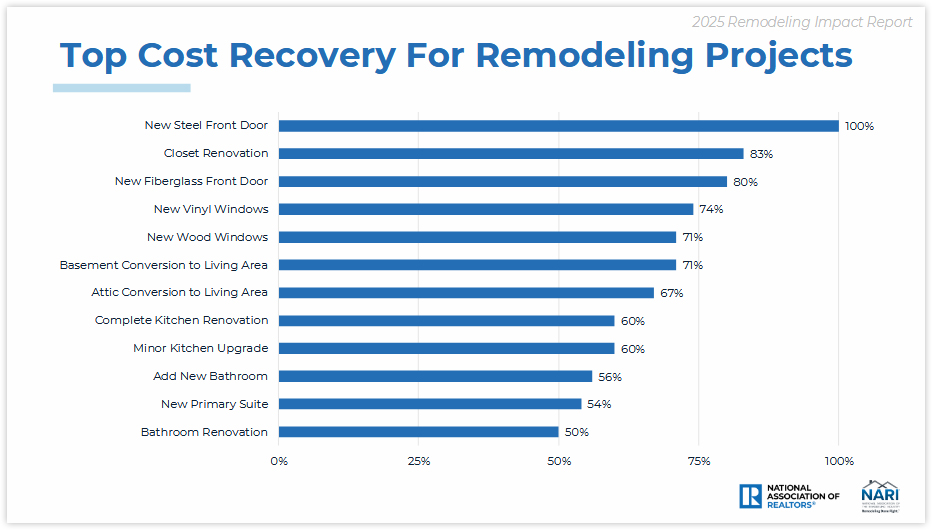
As a bonus to bringing you joy, many projects will also pay you back for at least a portion of their cost when it’s time to sell your home. Projects that increase your home’s curb appeal tend to bring you the highest return on investment (ROI), although closet renovation snuck in as a surprise gem:
What If You’re Remodeling to Sell?
In virtually any real estate market, a home that feels fresh, clean, modern, and move-in ready will always sell faster and for more money than its dated counterpart. This isn’t always tangible in the ROI studies but, as agents, we see it every day. The good news is that the updates you make to sell are often more cosmetic and less expensive than the upgrades you might make if you were planning to stay in the home forever (pssst…check out this article on remodeling projects you should avoid if you’re selling your home).
The two charts below show both the projects REALTORS® most often recommend sellers do before selling, and five projects we’ve seen increased demand for from buyers:
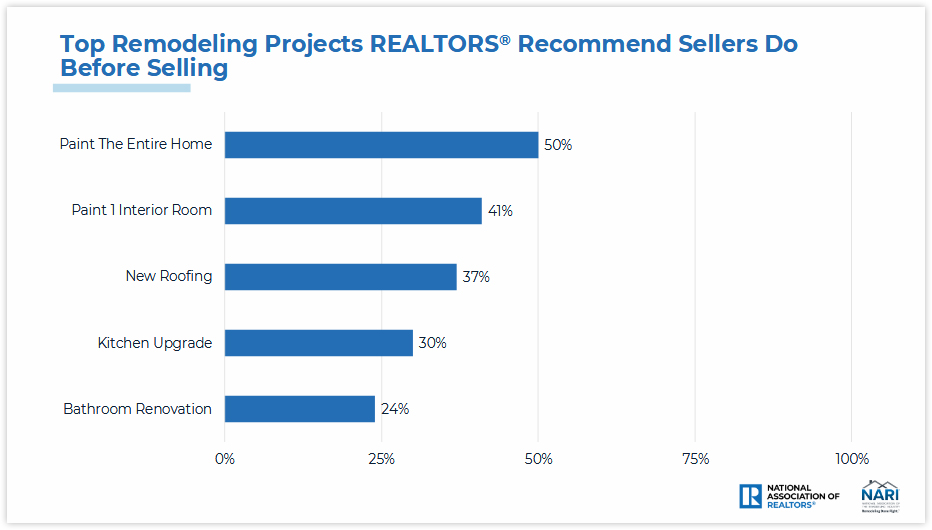
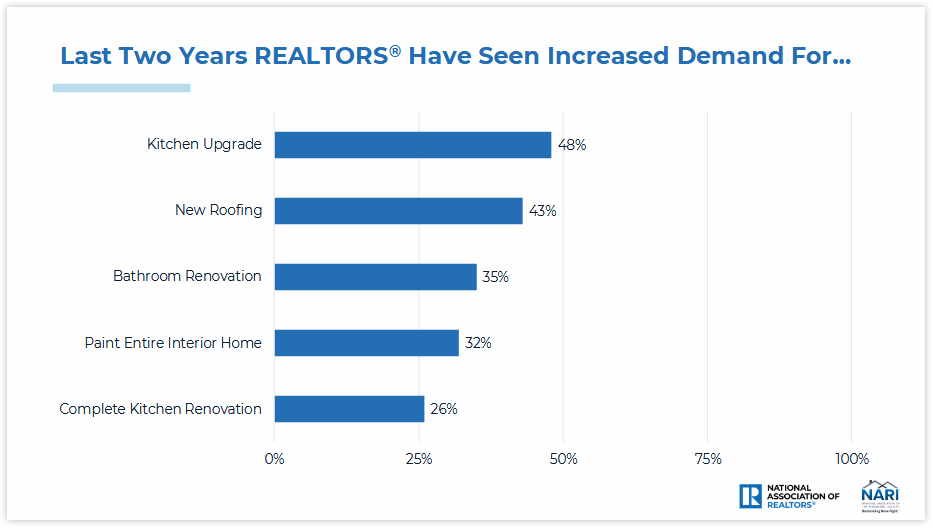
It’s critical to understand that every home, neighborhood, and situation is different. Your home’s unique characteristics and your personal goals as a homeowner will have more impact on which remodeling projects are best for you than any of these general trends. If you’re remodeling to sell, reach out for advice; I’m happy to help you choose the right projects—and avoid the wrong ones—to help you accomplish your objectives.
Data & charts copyright ©2025 “2025 Remodeling Impact Report.” NATIONAL ASSOCIATION OF REALTORS®. All rights reserved. Reprinted with permission. April 9, 2025, https://www.nar.realtor/sites/default/files/2025-04/2025-remodeling-impact-report_04-09-2025.pdf.
© Copyright 2025, Windermere Real Estate/Mercer Island.
A Consumer’s Guide to Homeowners Insurance

If you’re a homeowner or looking to buy a home, insuring your property is critical to protecting your investment—and if you’re getting a mortgage, it’s a must. It can be daunting trying to navigate the many options available to you. What does your policy cover…and what isn’t covered? What does the insurance company provide if your property is damaged or destroyed? Recently, the National Association of REALTORS® released this helpful guide on understanding the ins and outs of homeowners insurance. Here is a quick rundown of what you need to know…
How does property insurance work?
For certain unexpected events that cause a loss to your home or property, homeowner’s insurance can cover the cost to repair/rebuild the property and other structures like fences or garages. Most policies also cover personal belongings within the home, legal/medical fees for accidents occurring on the property, and temporary housing if a covered event (like a house fire) makes your home uninhabitable.
What losses are covered?
Your insurance policy will list the specific “perils” that are covered. The most common type of policy covers both the structure and personal assets for losses from house fires, storms, freezing, theft, vandalism, and sudden plumbing bursts—this is known as a HO-3 or “Special Form” policy. Most policies don’t cover earthquakes or natural floods (although you can get additional policies for those perils).
Is insurance required?
There are no laws requiring you to maintain homeowners insurance. However, most lenders require it for the duration of your mortgage. Required or not, it’s generally a good idea to protect your assets (especially if you have a lot of equity in your home).
What is the cost, and how is it paid?
As with many costs, insurance premiums are on the rise throughout the country (here’s how much, where, and why). Your individual policy’s cost will be based on your home’s age, size, condition, location, and other factors like whether you have a security system or have added on additional coverage. You may have the option to pay the premium annually or break it into smaller payments. If you have a mortgage, the lender usually collects a monthly “escrow” payment that they keep in an account to pay the insurance premiums and property taxes from on your behalf.
What happens in the event of a loss?
Most insurers will cover “replacement cost”—the amount needed to buy a new, comparable version of what you lost up to a dollar limit specified in the policy. It’s important to understand that replacement cost is not the same as market value; you’ll be compensated for the actual cost to repair/rebuild/replace your home regardless of what you paid for it or what you could sell it for. Typically the insurer will reimburse you to have your home repaired or replaced with comparable quality if it’s insured to at least 80% of it’s replacement cost, less any deductible that your policy has.
Alternatively, “actual cash value” is the current value of an item that depreciates over time or with use (often used for replacing personal or under-insured property). For example, if you paid $2,000 for your new couch but now it’s only worth $1,000 due to normal wear and tear, your insurer will only pay $1,000 less the deductible. You may choose to upgrade your personal property coverage to replacement cost instead for an extra fee.
For extra peace of mind, you can also purchase an extended replacement cost policy that provides extra coverage up to a set percentage above the policy limit. This can protect you if your home costs more than anticipated to rebuild.
Are the premiums tax deductible?
The short answer is no, unless you run a business from your home or it’s a rental property. However, you may be able to claim a casualty loss deduction if you suffered a loss due to a federally declared disaster (but check in with your tax pro for advice specific to your situation).
Because laws vary from state to state, it’s important to do your homework if you’re purchasing a home in an unfamiliar area. You can either connect with me or your attorney for advice.
We earn the trust and loyalty of our brokers and clients by doing real estate exceptionally well. The leader in our market, we deliver client-focused service in an authentic, collaborative, and transparent manner and with the unmatched knowledge and expertise that comes from decades of experience.
© Copyright 2025, Windermere Real Estate/Mercer Island.
Is Downsizing Right for You? Here’s How to Decide

Choosing to downsize is more than just moving into a smaller space, it’s about curating a simpler lifestyle that fits your current needs. Whether you’re retiring, looking for an eco-friendly, low-maintenance home, or wanting a fresh start after your children have moved away, downsizing might be the best option for you. Before making the move, here’s everything to consider.
Why Downsizing Could Be the Right Choice
Increased Cash Flow & More Financial Flexibility
Downsizing can offer significant financial benefits, starting with a smaller mortgage, which frees up extra cash for other needs or desires. Home insurance costs also tend to be lower, as the size of the home typically influences insurance premiums. Downsizing to less square footage can also lower property tax bills. Finally, a smaller home also leads to decreased utility bills, as the cost of heating and cooling a smaller home requires less energy expenditure.
More Time, Less Maintenance & Stress
Bigger homes call for more maintenance. Downsizing can help cut down time spent on household chores such as cleaning and vacuuming, which will give you more hours to do something more enjoyable. Homeowners who have successfully downsized often feel happier because they are no longer overwhelmed by the demands of a larger home. Less responsibility, less housework, increased cash flow, and flexibility equals reduced stress.
A Greener Lifestyle
After downsizing, homeowners commonly buy less since they don’t necessarily have the room for it. Reduced consumption not only leads to a more minimalist lifestyle but also cuts down on waste. Less waste plus less energy expended to heat and cool the space means a smaller environmental footprint and keeps your home green.
What You Might Miss When Downsizing
While moving into a smaller space has benefits, there are trade-offs to consider. A smaller home means less storage space, meaning you’ll need to give away or donate furniture, books, kitchen supplies, and other belongings that may not fit. Less space and fewer rooms can also make the home feel cramped, especially if you’re a long-term homeowner used to larger square footage.
Remote work may also become more challenging in a downsized home. Finding a quiet, dedicated workspace can be difficult, and close quarters may make it harder to stay productive. Additionally, hosting overnight guests or bigger holiday dinners might be out of the question for a smaller home. Adjusting to a downsized lifestyle can take time for those accustomed to more space, requiring new habits and a fresh approach.
Questions to Ask Before Making the Move
Before downsizing, it’s crucial to reflect on how less space in your home will impact your lifestyle. Think about your attachment to your current home’s size. Do you need extra rooms for guests or a second bathroom for convenience? Will moving into a smaller home feel too much like a step backward? Or will it bring the sense of freedom and simplicity you’ve been looking for? Ask yourself these important questions to ensure you’re making the right choice:
- What are my must-haves in a smaller home? Think about what you might miss from a more spacious home, or factors like location, accessibility, and storage solutions.
- How will my daily routine change? Consider how a smaller space might impact your hobbies, work setup, or ability to entertain.
- Does this move align with my long-term plans? Imagine the next 5, 10, or even 20 years, and start to question if a smaller home meets your future needs.
- How much will it cost to downsize? Factor in moving expenses, costs associated with selling, new furniture purchases, and the amount it will cost to store or sell belongings you no longer have space for.
- What will I do with sentimental or bulky items? Consider whether you’ll keep, donate, sell, or store them, and how much space you’re willing to dedicate to cherished belongings.
If you believe downsizing is the right option and are ready for the next step, you’re probably asking yourself, “Should I sell first or buy first?” When you’re prepared to discuss your options, reach out to me for expert advice:
We earn the trust and loyalty of our brokers and clients by doing real estate exceptionally well. The leader in our market, we deliver client-focused service in an authentic, collaborative, and transparent manner and with the unmatched knowledge and expertise that comes from decades of experience.
This article originally appeared on the Windermere Blog.
